Driving in the Florida Sun: What the Skin Cancer Foundation Says About Auto Window Tint
The Side-Window Gap Most Drivers Don't Know About
There's a common belief that being inside a car protects you from the sun. For UVB — the rays that burn — that's mostly true. For UVA, it isn't. By federal requirement, windshields are laminated and filter out the majority of UVA. But the side and rear windows on most vehicles are tempered safety glass, which allows a significant amount of UVA to pass straight through.
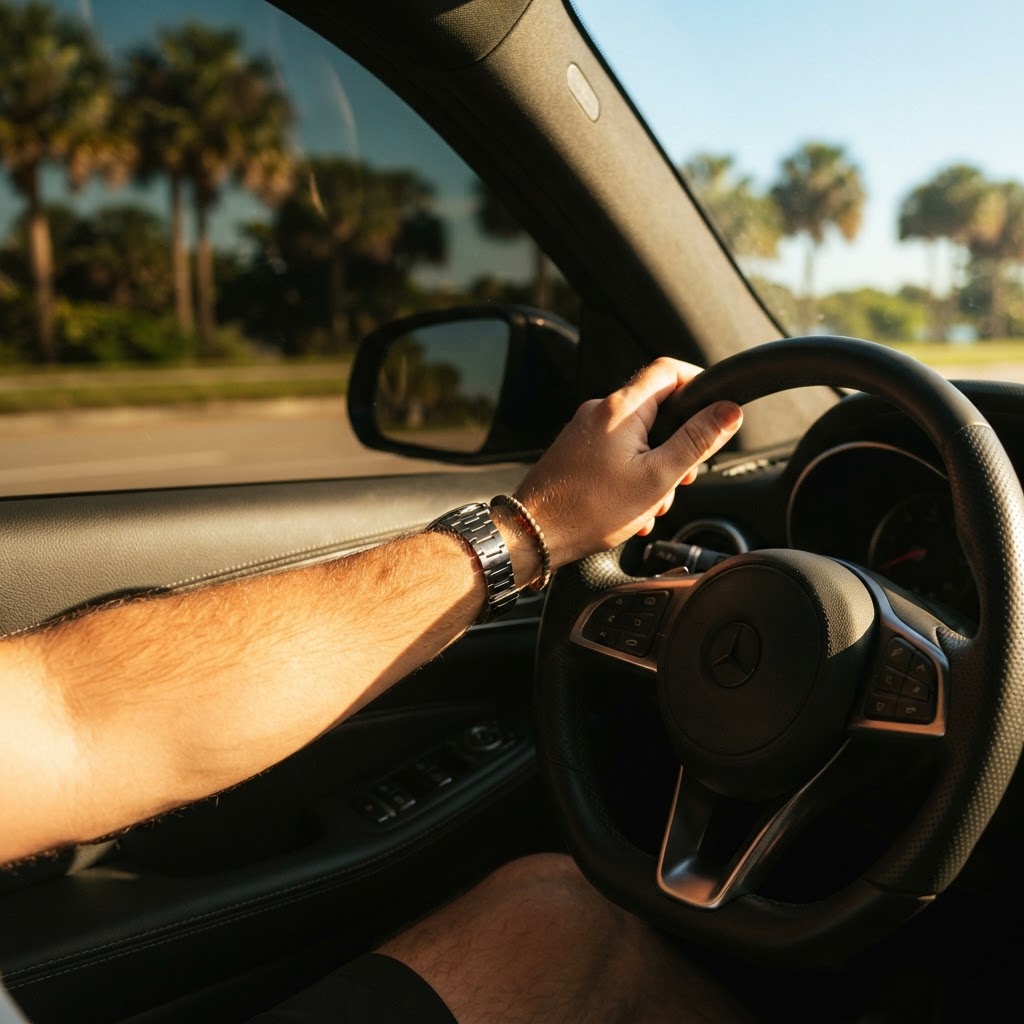
That means every time you drive — to work, to the beach, across the causeway — your left side (the driver's side) is taking direct UVA exposure that the windshield would have blocked. Research has long shown that Americans have measurably more sun damage and skin-cancer occurrence on the left side of the face and arm than the right. It's not a coincidence.
Why the Skin Cancer Foundation Backs Window Film
The Skin Cancer Foundation recognizes professionally installed automotive window film as an effective way to close that gap. A quality film applied to side and rear glass can block up to 99.9% of UVA and UVB at the glass — turning the windows that were letting rays through into a near-complete UV barrier, without blocking your view or noticeably darkening the cabin beyond your preference.
The Foundation's guidance is grounded in the science of cumulative exposure: skin damage from UV is dose-dependent, and the hours drivers accumulate behind the glass add up over years. Film reduces that daily dose to near zero.
Heat and Glare Are the Bonus, Not the Point
Most drivers come to window tint looking for relief from Southwest Florida's cabin heat and glare — and ceramic and carbon films absolutely deliver that. A parked car in a Fort Myers lot can exceed 130°F inside; film helps it cool faster and stay cooler, protecting leather and dash from cracking along the way.
But the less-visible benefit is the one that protects your skin for the long haul. UV doesn't make the cabin hot in a way you feel the moment you sit down — it's silent, and it's cumulative. That's exactly the kind of exposure the Skin Cancer Foundation wants people to address at the glass.
What to Look For
- A film with a high UV rejection rating. Premium ceramic and carbon films block 99.9% of UVA and UVB.
- A legal Florida shade. Florida sets VLT (visible light transmission) limits for front side windows, rear windows, and the windshield. A reputable installer will keep you street-legal while maximizing protection.
- No signal interference. Ceramic films are non-metallic, so there's zero impact on GPS, cell signal, or keyless entry.
- Professional installation. Computer-cut, dust-controlled application means clean edges and a flawless finish that lasts.
A Layer of Defense, Not a Standalone
As with residential film, automotive tint is a layer — not a replacement for sunscreen and common-sense sun protection. But it's a layer most Southwest Florida drivers don't have, on the glass that's quietly exposing them to UV every single day. Adding it is one of the simplest, highest-impact changes you can make for both comfort and long-term skin health on the road.