Window film vs. blinds —
the honest comparison.
They're not really competitors. Here's what each one actually does for a Southwest Florida home — and where each one wins.
One works at the glass.
One works after.
Blinds operate inside the room — after sunlight has already come through the glass. They control light and privacy very well, but the heat and UV have already arrived by the time they're doing anything.
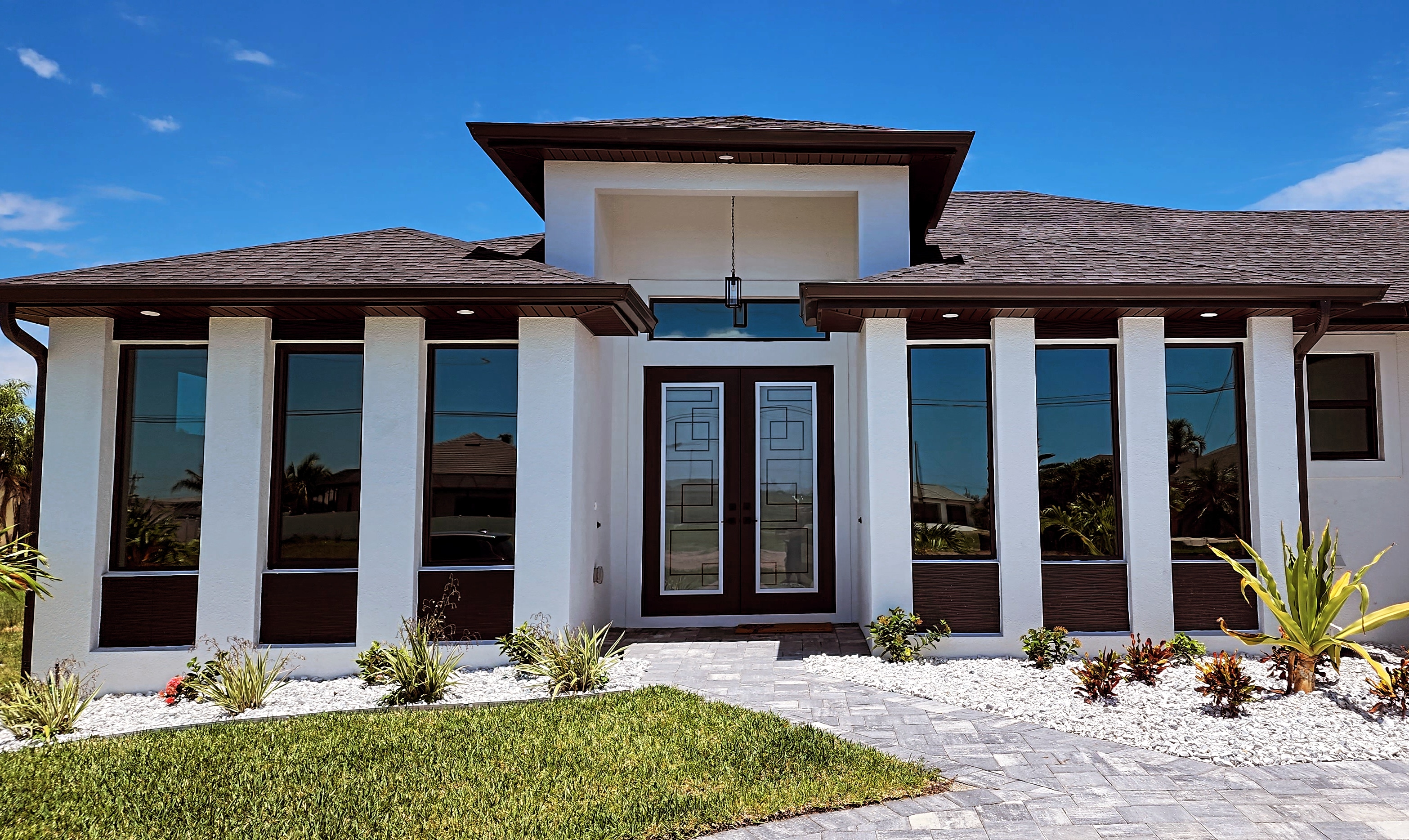
Window film is applied to the glass itself. It rejects up to 78% of solar heat and 99.9% of UV at the surface, before any of it enters your home — and it does it every hour of the day with your view wide open.
Six categories.
No spin.
Heat Rejection
Rejects up to 78% of solar heat at the glass, before it enters the room. Works every sunny hour with zero effort.
Block light, but absorb heat on their own surface and radiate it back into the room. Only help when closed.
UV & Fading
Blocks up to 99.9% of UV continuously — full protection with the view wide open.
Block UV only while fully closed, which also blocks the light and the view.
Light & View
Keeps the view and most visible light — rooms stay bright and open.
Deliver exactly as much light and view as you're willing to close off. Privacy and view are a trade.
Privacy
Dual-reflective film adds strong daytime privacy while preserving the view. At night, with lights on, film alone doesn't hide much.
Total privacy on demand, day or night, at the pull of a cord — the clear winner after dark.
Maintenance
Clean it like glass. No cords, slats, dust collection, or mechanism to fail over the years.
Slats collect dust and salt-air residue in SWFL homes and need regular cleaning, especially near open sliders.
Cost & Lifespan
One-time installation that performs 15 to 20 years or more with nothing to replace or repair.
Lower upfront cost per window, but cords, mechanisms, and warping add replacement cycles over the same period.
You need darkness and after-dark privacy.
- Sleeping rooms where you need true blackout darkness
- Full night-time privacy with the lights on
- Full control over light minute-by-minute
You need to beat the Florida sun itself.
- Heat, UV, and fading — the Florida problems blinds can't solve
- Preserving a view you paid for (gulf, canal, golf course)
- Set-and-forget performance with zero daily effort
- Glass that's too large or awkward for blind treatments
Use film for the sun.
Use blinds for the dark.
In a Southwest Florida home, the two products solve different problems and layer beautifully: film handles the heat, UV, fading, and glare your blinds were never going to stop — and blinds give you blackout and night privacy that film, honestly, can't. Most of our film customers keep their blinds. They just stop needing them closed all afternoon.
Questions, answered.
Where to go from here
City-specific film details and related buyer's guides from Visionary.
Not sure which your home needs?
We'll look at your glass, sun exposure, and how you use each room — then tell you honestly where film pays and where blinds already do the job.