TSER Explained: How Total Solar Energy Rejection Is Calculated (and the Infrared Numbers Some Companies Misuse)
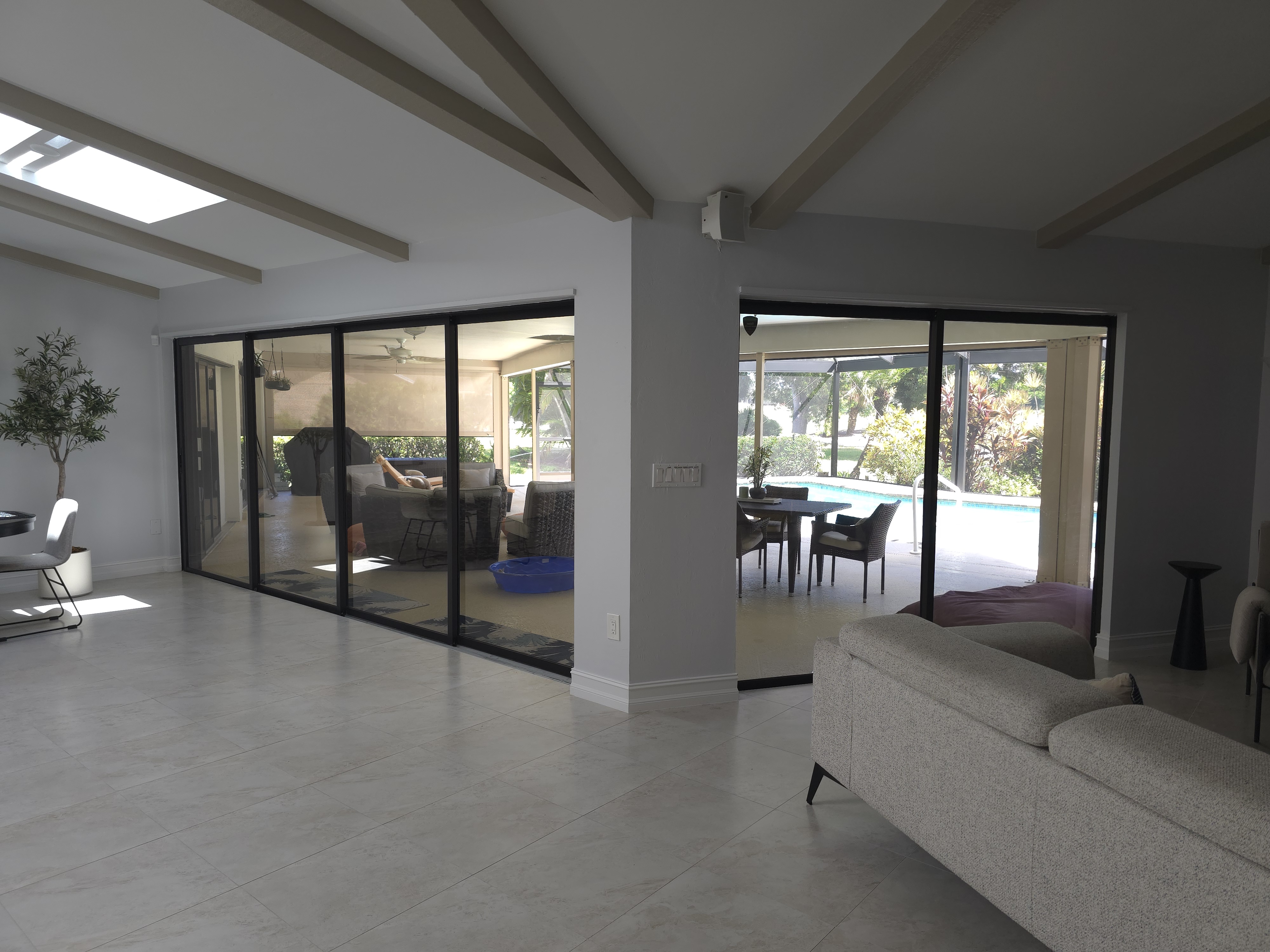
The One Number That Actually Matters
Walk into any window film showroom — or scroll any installer's website — and you'll be hit with an avalanche of percentages: 99% UV block, 97% infrared rejection, 80% glare reduction. One number matters more than all the others combined, and it's the one most companies bury in the fine print or skip entirely: TSER, or Total Solar Energy Rejection.
TSER is the industry-standard measure of how much of the sun's total energy a film keeps out of your home, office, or vehicle. It's the single best apples-to-apples comparison between films. If you're evaluating film for heat — and in Southwest Florida, you are — TSER is the number to ask for first.
What the Sun Is Actually Made Of
To understand TSER, you have to understand what's hitting your glass. Sunlight isn't just visible light. The solar spectrum that strikes a window breaks down roughly like this:
- Ultraviolet (UV): ~3% of solar energy. The rays that fade your floors, artwork, and upholstery — and damage skin.
- Visible light (VIS): ~44% of solar energy. Everything you actually see — the brightness and glare you feel.
- Near-infrared (NIR): ~53% of solar energy. Invisible radiation. This is heat — and it's more than half of the sun's total energy.
That last line surprises people: the majority of the sun's energy arrives as invisible infrared, not visible light. That's why two films can look identical from the inside — same view, same brightness — and perform completely differently against heat.
How TSER Is Calculated
TSER answers one question: of all the solar energy hitting the glass, what percentage never makes it into the room?
A window film deals with incoming solar energy in three ways:
- It transmits some — a portion passes through the glass into your space.
- It reflects some — a portion bounces back off the glass to the exterior.
- It absorbs some — the film and glass soak up the rest, which is then re-radiated both outward and inward.
The calculation:
TSER = 100% − (solar energy transmitted) − (absorbed energy that ends up re-radiated inward)
In other words, TSER counts everything the film rejects — reflected energy plus absorbed energy that flows back outside — as a share of the sun's total energy across the full solar spectrum: UV, visible, and infrared together.
A film with a 60% TSER keeps roughly 60% of the sun's total energy out of your space. A 40% TSER film — even one that looks dark — lets in twice as much heat. This is why a dark dyed film can have a worse TSER than a nearly-clear ceramic film: darkness measures visible light blocking, and visible light is less than half the story.
This is measured per recognized industry standards (NFRC 300-series test methods), using the full solar spectrum and standard conditions — not a hand-picked wavelength in a marketing lab.
The Infrared Number Game
Here's where honest marketing and honest science part ways with some of the industry. You'll see ads claiming "97% infrared rejection" or "99.9% heat rejection" on films whose TSER is a modest 45–55%. How?
There is no standardized way to quote an infrared rejection number — so it gets gamed three ways:
- The narrow-band trick. The solar infrared range spans roughly 780 to 2500 nanometers. Some companies quote IR rejection across a tiny slice of that range — say 1500–2100nm, where their film happens to excel. A film can post 97% in that band while letting most of the 780–1500nm region — where a large share of NIR energy actually lives — pour straight through.
- The single-wavelength trick. Measuring at one convenient wavelength is even easier. It's like rating a car's fuel economy during one downhill mile of a cross-country trip.
- The "heat rejection" word swap. Since infrared is over half the sun's energy, some ads quietly imply that a 97% IR number means 97% total heat rejection. It never does. A film with 97% single-band IR rejection and a 55% TSER is still letting nearly half of the sun's total energy into your room.
None of this means infrared performance doesn't matter — it does, and premium ceramics do superb work across the NIR range. It means an IR percentage quoted without TSER is not a heat number. It's a highlight reel.
How to Compare Films Honestly
When you're comparing films — or comparing us to anyone else — ask for three numbers, on the same product, from the same data sheet:
- TSER — total solar energy rejected, full spectrum. The headline number.
- VLT — visible light transmitted. How dark it looks; your view and brightness.
- UV rejection — skin and interior protection; premium films run 99.9%.
Two films at the same VLT can differ by 20+ points of TSER. That difference is the difference between a lanai you use in August and one you don't. Any reputable installer — including us — will hand you the manufacturer's published performance data with all three numbers on it. If a company will only quote you the infrared percentage, that tells you what you need to know.
The Bottom Line for SWFL Home and Business Owners
In Fort Myers, Cape Coral, Naples, Estero, and Bonita Springs, your windows fight the sun every day of the year. TSER is the honest scoreboard for that fight — one number that accounts for UV, visible light, and all of the infrared, calculated the same way for every film on the market.
Our job is to put the right TSER on your glass for the way you live and work — balancing heat rejection, view, appearance, and code — and to show you the actual performance data behind every film we recommend. That's the difference between marketing and measurement.